Showing posts with label foreclosure. Show all posts

Thursday, September 15, 2011

foreclosure auctions


Business Invest Investing.jpg by aareps


You've no doubt seen them or study them. Glossy advertisements or four-color spreads in magazines and magazines promising to instruct you every one of the juicy information about successful real estate investing. And all you have to do to learn each one of these real estate investing surface encounters chuck russo secrets is to pay a rather high sum for a one-or two-day seminar.


Often these kinds of slick property investing workshops claim that you could make intelligent, profitable real estate investments with absolutely no money down (with the exception of, of program, the hefty fee you purchase the workshop). Now, how interesting is that? Make a profit from real est investments you created using no money. Possible? Not probably.


Successful investment requires cashflow. That's the character of any kind of business or even investment, especially real-estate investing. You put your money into something that you hope and plan is likely to make you more income.


Unfortunately too few newbies towards the world of property investing think that it's any magical type of business where standard business rules don't apply. Simply set, if you want to stay in real-estate investing for a lot more than, say, a evening or 2, then you will have to create money to utilize and invest.


While it could be true that buying property with no money down is straightforward, anyone that is even made a basic investment (such as buying their very own home) understands there's far more involved in property investing that will set you back money. For example, what regarding any essential repairs?


So, the primary rule people a new comer to real est investing must remember is to have available cash supplies. Before you decide to actually perform any real estate investing, save some cash. Having just a little money within the bank when you begin real estate investing surface encounters chuck russo can help you make more profitable real estate investments in rental properties, for example.


When property investing in rental properties, you'll want in order to select only qualified tenants. If you've no income when real estate investing in rental qualities, you might be pressured experience a a smaller amount qualified tenant because you need somebody to cover you money to be able to take attention of maintenance or attorney fees.


For almost any real property investing, meaning local rental properties or even properties you get to re-sell, having money reserved can enable you to ask to get a higher cost. You can ask for a increased price from the real estate investment because an individual surface encounters chuck russo won't feel financially strapped as you wait for an offer. You won't be backed into a corner and forced to accept just any offer because you desperately need the money.


Another downfall of numerous new to property investing will be, well, greed. Make a profit, yes, but don't become therefore greedy that you simply ask regarding ridiculous leasing or second-hand rates on any of your real property investments.


Those a new comer to real property investing have to see property investing as a business, NOT an interest. Don't think that real estate investing will make you rich overnight. What company does?


It will take about half a year to determine if property investing in for you. If you might have decided that, hey I love this, then give yourself a couple of years to truly start earning money. It typically takes at the very least five years to become truly productive in real-estate investing.


Persistence could be the key to success in real estate investing. If you've decided that property investing is made for you, surface encounters chuck russo keep plugging away at it and the rewards will be greater than you imagined.


Ashton Kutcher probably gets more pitches in Silicon Valley than Hollywood these days.


The movie actor and technology investor turned up the star power at the TechCrunch Disrupt conference this week in San Francisco, where start-up companies competed for his attention. Michael Arrington, fresh off his own Hollywood worthy drama, interviewed Kutcher on stage Tuesday.


Kutcher plays a tech investor in real life and in CBS' top-rated "Two and a Half Men" on TV. His character, Walden Schmidt, is an Internet billonaire who sold his company to Microsoft and now backs other entrepreneurs.


"There are some parallels to my actual life," Kutcher said.


On the show, Kutcher said he covered his character's laptop with stickers of his "dream portfolio" companies but CBS balked at giving exposure to companies that hadn't paid for the privilege.


Kutcher told Arrington that his investments were a "witch hunt" for the next big thing "that is so magic you can't understand how it works."


"I wonder what would happen if a pilgrim would have seen a computer back in Massachusetts 200 years ago. They would have killed the person as a witch because the computer would look like magic. That's the essence of being a good investor, they're on witch hunts," he said. "That's what I’m trying to do."


Kutcher is not your typical celebrity investor. He was a biochemical engineering major in college so he gets technology but, because he was a model at 19, he says it's nice to be appreciated for "something substantial."


On TV Kutcher is in the funny business. But in technology he's hunting for happiness. Kutcher says he picks technologies that have the greatest potential to create more love, friendship and connectivity in the world.


He has made 40 investments in companies such as AirBNB, Path and Skype but does not disclose many of them.


"I think sometimes for the early-stage companies that I've invested in, disclosing that I'm an investor can be detrimental to the story of the company," Kutcher said.


RELATED:


Ashton Kutcher: Entrepreneur, investor


Star investors (and other stars) come out


Ashton Kutcher at TechCrunch50: Blah, blah, blah


-- Jessica Guynn


Photo: Hollywood actor and Silicon Valley investor Ashton Kutcher and TechCrunch founder Michael Arrington at TechCrunch Disrupt. Credit: Araya Diaz / Getty Images


D I V O R C E the Fed.


Now. Uncontested. Just cut the ties that bind us to the slavery.


but then the idiots in congress, and the "Current Resident" on 1600 Penn Ave, would have full control, in which case, the skids would be greased even more. Well, that might not be entirely true, since most of those bastards are nothing but mere marionettes, with their strings being yanked at every move, by the likes of soros et al, you know the ones ...."new world order" lovers who are aiding in the dismantling of the once Great US, and serving it piece by piece to china, however, the same zealous ideologues and true enemies of the US, fail to notice that that marvel called EU is crapping out, approaching the full blow-out point, at which time most of their 'contents' gleefully ingested as ingredients of the delicious EU, will be excreted, and when the end result will hit the proverbial fan .... duck and cover.


Unfortunately, what Gross has become is a splendid specimen of the 'grownup hippies' who in the 60's and 70s were raising hell, in the name of a better America, while now, a decent number of them, to varying degrees, having become 'fat cats', forgot how they were able to amass their fortunes, and instead of uniting and contributing however possible to returning the country on the path to prosperity, are now, continuing to chase an easy buck, by financing our adversaries, and most likely our enemies, based on their propaganda they already consider us their enemy - all to the detriment of the quality of life during the 'golden years' for some of us, as well as the quality of life (or lack thereof) for our children and future generations.


Once Heli-Ben got rates to 4% yet the economy continued its tanking trajectory, the politicians should have pulled their heads out of their asses, and begin serious work on policy intervention aimed entirely at rebuilding the domestic manufacturing base, which is all but gone, as well as ensuring that any fed provided liquidity remains 100% - or close to it - in the US.


Given the facts revealed by the Bloomberg recently released Fed back-door loans, makes me wonder if Uncle Ben himself is not among the facilitators of the "new world order"?!


So me thinks anyway.


Duck 'n cover everyone.


Wednesday, September 14, 2011

foreclosure law


INVEST 2010 - Registration by Commerce Resources Corp. (TSXv: CCE)


You've without doubt seen them or study them. Glossy ads or four-color advances in periodicals and magazines promising to show you every one of the juicy information about successful real estate investing. And all you need to do to learn each one of these real est investing surface encounters chuck russo secrets is to pay a rather high sum for a one-or two-day seminar.


Often these kinds of slick property investing classes claim that you can make smart, profitable real-estate investments with zero money lower (other than, of course, the significant fee you pay for the class). Now, how attractive is which? Make a make money from real property investments you made with no money. Possible? Not likely.


Successful investment requires cash flow. That's the nature of almost any business or perhaps investment, especially real-estate investing. You put your money into something which you desire and plan can make you additional money.


Unfortunately too few newbies to the world of property investing believe it's a magical type of business in which standard enterprise rules do not apply. Simply set, if you need to stay in property investing for more than, say, a day time or 2, then you are going to have to create money to make use of and make investments.


While it may be true in which buying real estate with absolutely no money down is easy, anyone that is even made a basic owning a home (just like buying their own home) understands there's far more involved in real estate investing that will set you back money. For illustration, what concerning any essential repairs?


So, the primary rule people not used to real property investing should remember is always to have obtainable cash stores. Before you choose to actually perform any property investing, save some money. Having just a little money in the bank when you start real est investing surface encounters chuck russo can help you make more profitable real estate investments in rental properties, for example.


When property investing in rental qualities, you'll want every single child select only qualified tenants. If you've no cash flow when real-estate investing in rental attributes, you could be pressured to take a less qualified tenant since you need somebody to pay you money to be able to take treatment of maintenance or attorney at law fees.


For any type of real est investing, meaning rental properties or even properties you get to sell, having funds reserved can allow you to ask to get a higher price. You can request a greater price from your real estate investment because an individual surface encounters chuck russo won't feel financially strapped as you wait for an offer. You won't be backed into a corner and forced to accept just any offer because you desperately need the money.


Another downfall of several new to property investing is actually, well, greed. Make any profit, yes, but do not become therefore greedy that you simply ask with regard to ridiculous rental or resale rates on all of your real est investments.


Those new to real estate investing need to see property investing being a business, NOT a spare time activity. Don't think that real est investing is going to make you wealthy overnight. What enterprise does?


It will take about 6 months to figure out if real estate investing in for you. If you've decided that, hey I really like this, then give yourself a couple of years to truly start making money. It usually takes at the very least five years being truly prosperous in property investing.


Persistence may be the key to be able to success in real estate investing. If you have decided that property investing is perfect for you, surface encounters chuck russo keep plugging away at it and the rewards will be greater than you imagined.


It is very difficult to determine the sex of a pigeon. I used to keep pigeons as a kid so I’m good at it.


There are three ways to do it:


1 – Check their reproductive organs

Pigeons genitalia all look the same (they have ‘cloaca‘) so you will have to cut them open to actually see their reproductive organs. Not a very efficient method.


2 – See who goes on top

There isn’t much variation in the sex life of a pigeon. Males go on top. No Kama Sutra here. Fortunately all they do is eat and, ehm, reproduce. You won’t have to wait very long to see that happen. But you do need 2 pigeons and some patience.


3 – Look at their faces

Yes, pigeons have faces just like humans.


It takes years to be able to read the face of a pigeon. I kept pigeons as a kid so I can tell the sex of any pigeon just by looking at their faces for few seconds. Just like with most humans. Humans have the added benefit of clothing, hair and breasts. But even without that a face looks feminine or masculine.


Investors try to look under all those feathers but up close all excel sheets look the same. They try to see who goes on top but then you would have to wait until the entrepreneur meets an actual client.


But once you have met enough starting entrepreneurs one look at someones face is usually enough. You know what you have got and who is a good bet and who isn’t.


Just like with pigeons.


This is a variation of post I published in 2007. Photo credit: Igor Stevanovic via Shutterstock.


NEW YORK—The nation's top experts unanimously agreed Tuesday that the current struggles of the U.S. economy were no reason whatsoever to stop investing in print media, which they said was easily the safest and most profitable place to invest one's money.


Without exception, leading authorities across all relevant disciplines said that while traditional low-risk instruments such as CDs, bonds, and gold were still relatively secure investments, only the nation's beloved print media outlets could offer both the reliability and the potential for tremendous financial gain required for guaranteed peace of mind.


"Print media is far and away your best bet in this tough fiscal climate," said the nation's foremost economists. "Just put your money in and forget about it for 10 years, 20 years, 50 years, doesn't matter. No economic downturn on earth can touch it."


"There's no question about it," continued all economic experts. "If you're a nervous investor—and you should be in this climate—you should be pouring all your cash into your local broadsheet right this second."


One of millions of Americans who will always support print media no matter what new technology comes along.


Experts went on to tell reporters that not only is there no safer place to invest than print media, there's also no sector of the economy with more promise for growth. Urging investors to diversify their stock portfolio among national and regional newspapers as well as dailies and weeklies, they said print media will be a "bonanza" for shareholders, even as the economy as a whole flounders.


"Print media is a cash cow that will multiply an investment over and over," said the experts. "Other products fail, real estate bubbles burst, but print media is here to stay. The only retirement strategy anyone needs is as close as their local newsstand."


"People who invest in print media are going to see their holdings grow by leaps and bounds, and they'll probably ask themselves, 'How can this be real?'" continued the experts, every single one of whom described print media as "the closest thing there is to a money tree." "Well, trust us, it's real. You can expect to make a lot of money very quickly, and best of all, you'll do it by supporting a pillar of American society."


In explaining print media's remarkable appeal, the entire financial community said citizens rely, and will continue to rely, on printed newspapers to keep them not only informed about current events, but better prepared to function as the kind of knowledgeable citizens a robust democracy requires. Others pointed toward people's deep emotional attachment to print media and the loyalty readers have for the treasured publications as a financial guarantee. In addition, investors from every major financial firm strongly noted that newspapers are an integral part of the ongoing American story that is written each morning, chapter by chapter, on black-and-white newsprint by decent, hardworking men and women who live in the very communities their newspapers serve.


Not investing hundreds of millions of dollars in newspapers right this very second, they added, would simply be foolish.


"No matter how tough times get, people will never turn their back on their newspapers," said every media expert in the nation, adding that newspapers would likewise never, never, never take their readers for granted, because it is readers that the print media industry depends on, and the nation's newspapers and magazines have always, without fail, worked tirelessly to provide readers with the highest-quality product possible. "They wouldn't desert their trusted print media outlets like that. Besides, everyone knows that new media technologies come and go, and that newspapers are an indispensable part of our national identity that must be protected by all of us, and chiefly by shrewd investors or even ordinary business owners who take out a very reasonably priced quarter-page ad. Or something smaller. You'd be surprised how much mileage you can get out of even a tiny little classified."


"The weekly newspapers are, of course, the most vital," the nation's media experts added. "We'd really be lost without those."


Thursday, September 9, 2010

foreclosure help


WASHINGTON — The Obama administration is providing $3 billion to unemployed homeowners facing foreclosure in the nation's toughest job markets.


The Treasury Department said Wednesday it will send $2 billion to 17 states that have unemployment rates higher than the national average for a year. They will use the money for programs to aid unemployed homeowners. Some of those states have already designed such programs.


Another $1 billion will go to a new program being run by the Department of Housing and Urban Development. It will provide homeowners with emergency zero-interest rate loans of up to $50,000 for up to two years.


The administration was required to launch the HUD emergency loan program by the financial regulatory bill signed by President Barack Obama last month.


The Treasury is using money from the $700 billion Wall Street bailout to pay its share of the program. Officials said they won't know until next month how many people are likely to be helped.


California will get the largest share of money for the Treasury program, at $476 million. Florida is in line for nearly $239 million. Illinois will receive $166 million and Ohio will receive $149 million.


The Obama administration has rolled out numerous attempts to tackle the foreclosure crisis but has made only a small dent in the problem. More than 40 percent, or about 530,000 homeowners, have fallen out of the administration's main effort to assist those facing foreclosure.


That program, known as Making Home Affordable, provides lenders with incentives to reduce mortgage payments. So far, it has provided permanent help to about 390,000 homeowners, or 30 percent of the 1.3 million who have enrolled since March 2009.


Also receiving money are Michigan, $129 million; Georgia, $127 million; North Carolina, $121 million; New Jersey, $112 million; Indiana, $83 million and Tennessee, $81 million.


Concerted efforts designed to prevent unnecessary foreclosures have reduced the amount of mortgage redefaults, says a group of state attorneys general and banking regulators. But the group also expressed concern that foreclosures continue to outnumber loan modifications.


According to a report issued by the State Foreclosure Prevention Working Group, a multi-state coalition, recent loan modifications are in fact performing better. Loan modifications may include reduced interest rates and other changes that result in smaller payments -- and in some cases, lower outstanding balances.


"Some analysts have predicted redefault rates as high as 75%, but today's report paints a brighter picture of the future," Washington Attorney General and working group member Rob McKenna said in a statement. "The newer modifications are holding up better, with fewer borrowers redefaulting."


Despite the progress noted in the report, McKenna says he's concerned that 6 out of 10 seriously-delinquent borrowers are not getting any help.


The report tracks loan modifications made by nine mortgage companies who were servicing 4.6 million loans as of March 2010. Banks -- which are regulated by federal agencies -- are not included in the report. Compared to loans modified in 2008, borrowers whose loans were modified in 2009 were 40% to 50% less likely to be seriously delinquent 6 months later.


The majority of loan modifications (89%) tracked by the working group for the first quarter of 2010 showed some reduction in payments, and nearly 78% lowered the monthly payment by more than 10%. Redefault rates were lower for loan modifications that reduced the principal balance by more than 10%.


However, only 1 in 5 modifications reduce the loan amount, and the vast majority increase the loan balance by adding servicing charges and late payments.


"When housing prices are low, the lender is going to take a loss if that home is foreclosed and surrounding home values will ultimately be impacted," McKenna said in a statement. "The underlying theory of a loan modification is to enable the lender to get the same value out of the home as if it had been foreclosed. The lender still takes a loss through the reduction of interest or principle. But the net result is better for the community and the borrower because, of course, a house is more than just an asset. It's a home."


The Office of Thrift Supervision and the Office of the Comptroller of Currency reported a similar reduction in redefault rates in its Mortgage Metrics Report for the first quarter of 2010. Of the 590,000 modifications made in 2009, nearly 52% were still current (i.e. homeowners were making payments on time) at the end of the first quarter of 2010, the agencies reported. By comparison, only 27% of loan modifications made during 2008 were still current.


McKenna and his office have trying to help homeowners by cracking down on unethical lenders and fraudsters, pushing for the modification of unaffordable mortgages, urging changes to bankruptcy rules, and seeking state-federal collaboration on bank regulation.


The Washington Attorney General's Office also granted $920,000 of its Countrywide/Bank of America settlement payment for local foreclosure prevention programs that provide counseling and pro bono legal services.


The State Foreclosure Prevention Working Group consists of 12 state attorneys general (Arizona, California, Colorado, Florida, Illinois, Iowa, Massachusetts, Nevada, North Carolina, Ohio, Texas and Washington), bank regulators for New York, North Carolina, and Maryland, and the Conference of State Bank Supervisors. The group was founded in 2007 and has issued four previous reports.
eric seiger

Z on TV: Fox <b>News</b> says it will not cover burning of Quran - TV <b>...</b>

Gentlemen: While I often find myself at odds with the opinions of your news network, I applaud your decision not to cover the Koran burning insanity. You are starving the attention-craving beast, precisely as necessary. Congratulations! ...

Finally! <b>News</b> on When We&#39;ll See Terrence Malick&#39;s &#39;Tree of Life <b>...</b>

What's the best way to get an auteur to finish his long-awaited film? A deadline, of course! Everyone needs 'em, even (or especially) Terrence Malick,

DataSphere Raises $10M For Hyper-Local <b>News</b> Platform «

DataSphere Technologies, which has developed a hyper-local news and advertising software platform for content publishers, today announced that it has closed a $10-million Series C financing round led by OVP Venture Partners and will be ...


Thursday, September 2, 2010

foreclosure auctions

Realtors are not reporting the true sold prices on homes.  Here are 2 examples.  If a home is listed on the MLS and then sells at a auction like Hudson & Marshal or RealtyBid, you can see the sold price online or if you attend the live auctions, see the house sell at open outcry auction.  The next day the houses are reported sold on the MLS but always at full price.

The example below sold for $115,000 at Realtybid but is listed as sold for $159,500 on the MLS.

Also, homes are listed on the MLS and sold on the HUD site.  You can see the sold area on HUD and the Bid Stats.  The house listed below sold on the Hud site for $90,061 but again was listed as sold for full price on the MLS $113,400.

These are only 2 examples, I have seen over 100 and assume it is occurring everywhere.  I understand that foreclosures are not included in the sales stats from the Realtor Assoc. but the stats they use are taken from the sold prices listed on the MLS.  They are all false.

Simply said, this means that any pricing data coming off Multiple Listing Services is fatally flawed, and if this observation is verified, could potentially be a simplistic means to misrepresent the true home price by up to 40% higher.

As for the examples, here is property 1 as represented by the MLS: note the price of $159,500

And below is the actual final auction price on the exact same property taken from RealtyBid:

The MLS certainly pulled all the correct information on the property... all except for the price.

Another example: 5572 Goodhue Ave, Rockford IL 61109. The house was sold in auction for a purchase price of $90,061 as the below screenshot from the HUD auction indicates:

Yet the very same property was listed on foreclosure.com, and subsequently pulled by Zillow, as having a value of $113,400

These are merely two examples.

We have a simple question: which price is the NAR, Case-Shiler, and every other resi real estate index service pulling: the higher or the lower. For the ongoing credibility of the suddenly green shoot free recoveryless recovery, we at least hope it is the correct one. Which is why we ask readers to advise us of any comparable bifurcations between paid and listed price on properties they may be aware of.

Suddenly David Rosenberg's claim that no properties over $750,000 sold in the past month doesn't seem all that outlandish...


Need-to-know No. 1: The fine print associated with the type of auction you're attending. If you plan to score your bargain-basement unit at the foreclosure auction on the steps of the county courthouse, consult with a local real estate attorney and make sure you conduct an exhaustive title search before you make your bid. It's possible to purchase one of these properties and still have to contend with other liens still on the property, like second (or third) mortgages, back property taxes and Homeowners Association (HOA) dues unpaid by the former owner.


Under the law in nearly half of the states, when you buy a place at the foreclosure auction, the former owner has anywhere from six months to a year after the auction to "redeem" their rights to the property, meaning they have the legal right to buy it back from you.


If you're buying the property at an auction of REO properties (Real Estate Owned by the bank), make sure you read 100% of the terms and conditions of the auction. Many auctions will allow you to get a property inspection -- go figure -- so you should. They will also often allow you to use a mortgage to finance your purchase, which the courthouse foreclosure auctions do not.


However, most of these REO auctions do take a non-refundable cash deposit from the auction winner, and do add some sort of "buyer's premium" on top of the winning bid -- some as high as 5%. That extra cash can make it tougher to get positive cash flow out of the place.


Get clear on the fine print before you buy at any property auction.


Need-to-know No. 2: Your numbers. Many a wanna-be investor thinks, "Hey -- it's a $50,000 condo. If I get $1,000 in rent -- I'll be making cash hand-over-fist." And there ends their cash flow analysis. Seasoned investors know, though, that there are always more line items to the story. If you're thinking about investing in even the cheapest of cheap condos, you still need to create a written cash flow projection, or pro forma, to see how feasible it is that the investment will actually pay off.


If you plan to finance your investment with a mortgage, you must factor in the mortgage payment, mortgage insurance (if you put less than 20% down), and closing costs. And, even if you are able to buy a cheap condo with cash, you still need to take into account the costs of HOA dues, property taxes, landlord's insurance, any utilities landlords pay in your neck of the woods (like water and gas), a property manager and repairs.


You should also include an allowance for long-term maintenance, possible special assessments by the HOA and vacancies -- every landlord deals with occasional months where no rental payments come in. And you should definitely have a chat with your tax adviser about the deductions you should factor in, and the income tax you may incur on the rental income.


Then, offset that -- on paper -- by the average rents being received by other landlords in the complex or the area. If you're only making $3.75 per month in the projections, you might decide that other investments are more sensible.


Need-to-know No. 3: Whether the HOA and the complex are healthy. Sacramento, Calif., real estate agent Stacey Wilson thought she'd scored, big-time, when she invested in a two-bedroom, two-and-a-half bath condo for $40,000 in September of 2009, especially since the place had gone for $175,000 in 2007. After closing, though, it quickly dawned on Wilson that the complex and the HOA were both broke.


"Take a look around and see whether things are in working order," Wilson advises prospective condo investors. "When things are broken, find out how long they've been broken." Wilson's complex has two pools and a sauna, but "none of them works -- and they haven't worked in years."


Also, Wilson's unit is in an HOA riddled with a sky-high rate of delinquent dues, so it can't afford to repair the pools and sauna, nor does it have the cash to replace the wood shake roofs on all the buildings. "We only have a couple of years of roof life left, and now the hazard insurance company is threatening to drop our coverage, because they see the wood roof as a fire hazard," Wilson explains. "It's really important to read every page of the HOA disclosures you get during escrow, and make sure they're solvent. If the HOA is broke, it can create a domino effect of problems."


Need-to-know No. 4: The landlord-tenant laws and restrictions of your city or HOA. Many urban areas, in particular, have rent-control and eviction-control laws that limit your ability to raise the rent, or to evict a tenant without having a particularly strong reason for doing so -- sometimes even requiring landlords to pay tenants to move out.


And because the percentage of owner-occupied units impacts the ability of an HOA's members to resell and refinance their homes (many banks won't offer mortgages in complexes with fewer than 75% of the units being owner-occupied), many HOAs put a cap on how many units can be rented out. If you're planning to buy the condo as a rental property, it behooves you to know how feasible and how desirable it is to be a landlord in that complex and town before you buy.


Need-to-know No. 5: Where goes the neighborhood. Wilson's foray into dirt-cheap condo investing turned into a true adventure when circumstances led to her moving into the property she thought she'd never live in. Turned out, the nighttime goings-on in her new neighborhood were unlike anything she ever expected from her exclusively daytime experiences in the area. Before investing in a discount condo, Wilson advises, act like someone house hunting for their personal residence, and "go by the place at night and on the weekends. You'd be surprised at how different a place can be at night."


The fact that a condo is so inexpensive might actually be a signal that the neighborhood may not be one you want to spend much time in, even as a landlord. Wilson says, with 20/20 hindsight, "If it's really cheap, it's probably not in the best place."
make money from home jobs

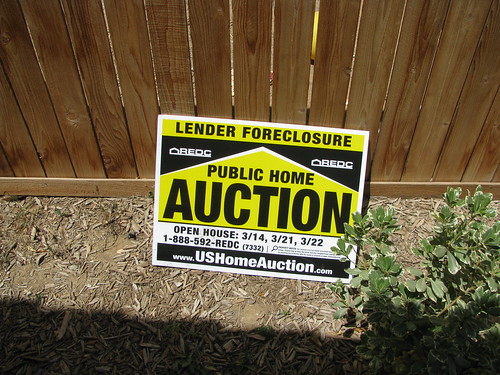
lender foreclosure by TheTruthAbout...